
Ein forensischer Leitfaden zur Delamination bei Wohnmobilen, Booten und Off-Grid-Systemen
Einleitung: Wenn „Flexibel“ zu Blättern beginnt
Wenn Sie viel Zeit auf Campingplätzen oder in Marinas verbringen, haben Sie es sicher schon gesehen: Ein Solarpanel, das aussieht, als hätte es einen schlimmen Sonnenbrand. Die oberste Schicht bläht sich auf, die Oberfläche wirkt milchig oder die Kunststofffolie löst sich in großen Stücken ab.
Bei LinkSolar hören wir ständig dieselbe Frage: „Meine Paneele erzeugen noch Strom, aber die obere Folie bläht sich auf oder löst sich ab. Hat das ETFE versagt?“
Die kurze Antwort lautet meistens nein. Die ETFE-Folie selbst ist nicht defekt; das Klebesystem, das das Panel zusammenhält, ist es. Was Sie sehen, ist ein Versagen des Laminierungsprozesses, oft beschleunigt durch extreme Hitze.
In diesem forensischen Leitfaden schauen wir über die kosmetischen Symptome hinaus und untersuchen die Ursachen – insbesondere, warum die Klebeschichten versagen – und wie Sie hochwertige Ersatz-flexible Solarpanels auswählen, die langlebig sind.
1. Der ETFE-Mythos – Folie vs. Kleber
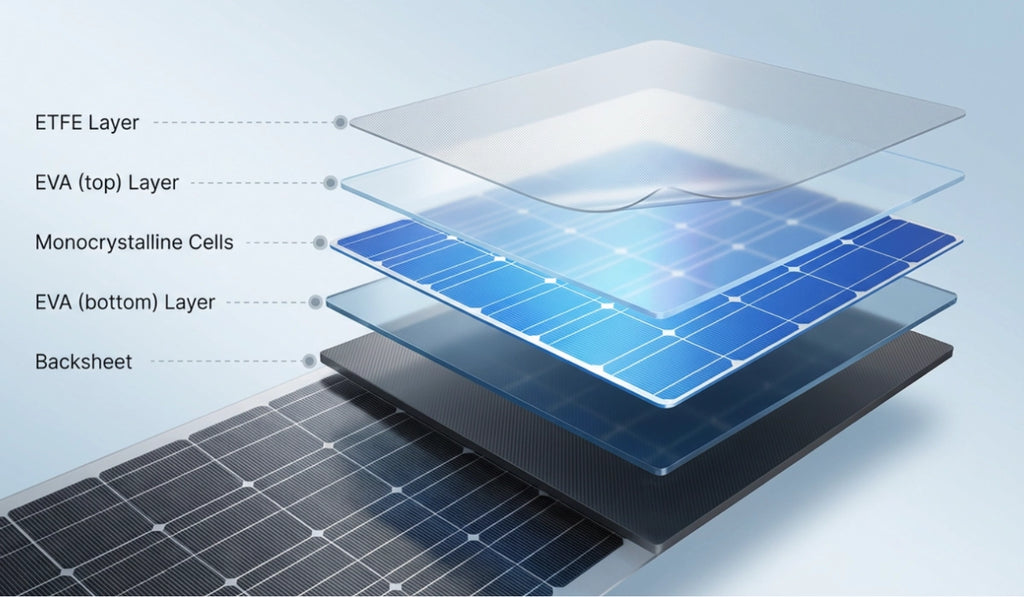
Zuerst müssen wir ein Missverständnis aufklären. In der Welt der flexiblen Solarzellen ist die obere Folie Ihre erste Verteidigungslinie. Hochwertige Paneele verwenden ETFE (Ethylentetrafluorethylen), weil es robust, selbstreinigend und transparent ist. Günstige Alternativen verwenden PET, das im Grunde dasselbe Plastik wie eine Wasserflasche ist.
Hinweis: ETFE ist ein fluorhaltiger Kunststoff, der für hohe Korrosionsbeständigkeit und Festigkeit über einen weiten Temperaturbereich entwickelt wurde.
Wenn Ihr Panel innerhalb von 1–3 Jahren kreidig und spröde wird, wurde Ihnen wahrscheinlich ein PET-Panel verkauft. Wenn Sie jedoch bei einem hochwertigen ETFE-Panel Ablösungen sehen, ist die Folie selbst oft noch intakt. Was versagt hat, ist die Verbindung darunter.

Es ist nicht die Haut, sondern der Kleber
ETFE ist ein Antihaftmaterial. Damit es auf Solarzellen haftet, ist ein spezieller Laminierungsprozess mit einem Verkapselungsmaterial, meist EVA, erforderlich. Wenn ein Panel delaminiert, ist das ein Versagen der Schnittstelle zwischen ETFE und EVA. Die Schuld liegt also nicht beim „Plastik“, sondern bei den Temperatur- und Installationsbedingungen.
2. Visuelle Forensik: Worauf Sie achten sollten

Delamination ist eine fortschreitende Krankheit. Auf einem Bootsdeck oder Wohnmobildach verläuft sie meist so:
- Das Anheben der Kanten: Feuchtigkeit dringt an den Ecken ein.
- Der „milchige“ Schleier: Das EVA zersetzt sich chemisch und verliert seine Transparenz.
- Blasenbildung: Erhabene Blasen erscheinen, besonders über den heißeren Solarzellen.
- Totale Trennung: Der Wind erfasst eine lose Kante und reißt die Folie ab.
3. Die Ursachen: Hitze & Chemie
3.1 Die „tödliche Umarmung“ (Installation & Hitze)
Wir lieben flexible Paneele, weil sie auf gewölbten Flächen montiert werden können. Aber sie flach auf ein wärmeleitendes Dach ohne Luftzirkulation zu kleben, ist eine Hauptursache für Versagen.
In voller Sommersonne kann ein direkt verklebtes Panel 85°C (185°F) erreichen. Bei diesen Temperaturen wird das EVA weich und verliert seine mechanische Festigkeit. Für spezielle Anwendungen, bei denen Hitze ein großes Problem ist, empfehlen wir unseren Partnern oft maßgeschneiderte Solarpanellösungen, die spezielle Montagestrukturen oder Rückseitenmaterialien erlauben.
3.2 Der Essig-Effekt (Hydrolyse)

Wenn Feuchtigkeit an den Paneelkanten eindringt – häufig bei Booten – durchläuft das EVA eine Hydrolyse. Es zersetzt sich und produziert Essigsäure (Essig). Diese Säure greift die inneren Verbindungen an und korrodiert die Solarzellen. Das ist oft als „Schneckenspuren“ (dunkle Linien) auf der Zelloberfläche sichtbar.
4. Die Sicherheitsgefahr: Hotspots und Brandgefahr
Ist ein abblätterndes Panel nur unschön? Nein, es ist eine Sicherheitsgefahr. Wenn sich eine Blase über einer Zelle bildet, staut sie Wärme und blockiert Licht. Diese Zelle erzeugt keinen Strom mehr, sondern verbraucht ihn und erzeugt einen „Hotspot“. Wir haben schon Rückseiten gesehen, die dadurch durchgebrannt sind.
5. So prüfen Sie Ihre Paneele (sicher)
Sie brauchen kein Labor, um Ihr System zu überprüfen. Eine Sichtprüfung und ein Multimeter reichen aus.
- Spannung prüfen (Voc): Trennen Sie das Panel ab. Die Spannung sollte nahe am Nennwert liegen.
- Strom prüfen (Isc) - ⚠️ VORSICHT: Solarpanels sind in der Sonne immer „live“. Decken Sie das Panel vor der Strommessung ab. Schließen Sie Ihr Multimeter an und decken Sie es danach wieder auf, um gefährliche Lichtbögen zu vermeiden.
Wenn die Spannung normal ist, der Strom aber 30–50 % niedriger, delaminiert das Panel intern. Es ist Zeit für einen Austausch.
6. Ehrliche Worte: Preis vs. Lebensdauer
Flexible Solarpanels gibt es auf Marktplätzen zu sehr niedrigen Preisen. Diese Panels verwenden meist Standard-EVA und haben unter harten Bedingungen nur eine Lebensdauer von 3 bis 5 Jahren.
Wir empfehlen unseren Kunden, die Kosten für den Austausch zu bedenken. Altkleber zu entfernen ist mühsam. Es lohnt sich, in Panels von einem seriösen Lieferanten wie LinkSolar zu investieren, der verifiziertes ETFE und stabile Verkapselungsmaterialien verwendet.
Zusammenfassung: Klug kaufen, klüger installieren
Delamination lässt sich nicht rückgängig machen, wenn sie einmal begonnen hat. Für Ihre nächste Installation:
- Materialien prüfen: Stellen Sie sicher, dass Sie echtes ETFE kaufen.
- Hitze managen: Verwenden Sie Abstandshalter oder Polycarbonatplatten für Luftzirkulation.
- Qualität wählen: Achten Sie nicht nur auf den Preis, sondern auf die Materialien.
Wenn Ihre aktuellen Paneele Anzeichen von Versagen zeigen, warten Sie nicht auf eine Sicherheitsgefahr. Kontaktieren Sie noch heute unser Engineering-Team für eine professionelle Empfehlung zu einem langlebigen Ersatz, der genau zu Ihrem Anwendungsfall passt.