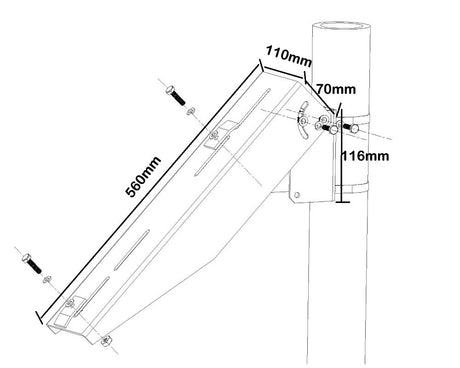
Stolpfästen för solpaneler till fjärrkameror, sensorer och små off-grid-system
Stolpfästen för solpaneler används när en panel behöver bättre solexponering, säkrare placering eller enklare riktning än vad en vägg eller en plan yta kan erbjuda. För fjärrkameror, telemetrienheter, miljösensorer, grindsystem och annan liten off-grid-utrustning löser en stolpmontering ofta flera problem på en gång: den lyfter modulen över gräs och staket, förbättrar orienteringen, minskar skuggning och försvårar sabotage.
Den här kollektionen fokuserar på stolpmonteringsbeslag för små och medelstora solpaneler som ofta används i IoT-, övervaknings-, kommunikations- och fjärrsäkerhetsprojekt. Om din tillämpning specifikt rör kameror eller passerkontroll kan du även utforska våra sollösningar för övervakningskameror och grindsystem. För telemetri- och övervakningsprojekt med lägre effektbehov, se våra sollösningar för IoT-sensorer och smarta enheter.
Så väljer du rätt stolpfäste för solpaneler
1. Börja med panelens storlek och vikt
Den första frågan gäller inte bara effekt, utan fysisk storlek. Två paneler med liknande effekt kan ha olika mått och vindlast. Matcha alltid fästet mot modulens verkliga storlek, ramtyp och förväntade utomhusförhållanden. Om du fortfarande håller på att välja själva panelen kan du bläddra i vår kollektion med minisolpaneler för kompakta tillämpningar med låg effekt.
2. Kontrollera stolptyp och diameter
Vissa projekt använder runda stålstolpar, andra använder fyrkantiga stolpar eller platsspecifika konstruktioner. Bekräfta stolpens diameter, monteringsytan och tillgänglig installationshöjd innan du köper. Fel typ av klämma ger vridning, dålig riktning och beslag som lossnar över tid ute i fält.
3. Ta hänsyn till vind och exponering
Ett fäste som fungerar utmärkt på en skyddad bakgård kan fallera vid en exponerad vägkant, gårdsinfart eller mätstation på en kulle. Vindlasten spelar större roll ju större panelen är. För installationer på avlägsna platser är en styvare monteringskonstruktion oftast värd pengarna. Om ditt projekt behöver ett komplett strömpaket och inte bara montage, se våra lösningar för solcellssystem på avlägsna platser.
4. Gör lutningsjustering till en del av konstruktionen
Stolpfästen väljs ofta just för att stolpen i sig inte kan riktas mot det ideala solläget. Justerbar lutning hjälper dig att återta energiutbyte när konstruktionens orientering är låst. Det är särskilt viktigt för system som prioriterar vintern och för platser med svagt solljus under delar av året.
5. Tänk på åtkomst för underhåll
Montera panelen tillräckligt högt för att minska skuggning och sabotage, men inte så högt att rengöring, inspektion eller service av kablaget blir ett elände. En bra lösning balanserar säkerhet, prestanda och praktisk fältservice.
Vilken produkt passar vilket projekt?
Universellt stolpmonteringskit för solpaneler | Justerbara fästen för paneler 5W–50W
Bäst för: fjärrsensorer, övervakningsenheter, små solcellsdrivna kamerasystem, telemetristolpar och allmän off-grid-utrustning i fält.
Det här är kollektionens mest mångsidiga alternativ för små till medelstora paneler. Det passar projekt som behöver justerbarhet och ett praktiskt monteringsområde för olika panelstorlekar.
Universellt monteringsfäste för 5W solpanel, vägg-/stolpmontage
Bäst för: mycket små solpaneler, kompakta sensornoder, utrustning med låg effekt och projekt där fästets utrymme spelar roll.
Det här alternativet är idealiskt när den försörjda enheten har en liten daglig energibudget och du vill ha en enkel, kompakt monteringslösning för en lätt panel.
Stolpfäste för solpaneler – justerbart monteringssystem för paneler 30–60W
Bäst för: större fjärrkameror, kommunikationsutrustning, enheter med högre förbrukning och mer exponerade utomhusinstallationer.
Det här är det bättre valet när panelstorlek, vindexponering eller platsförhållanden kräver en starkare bärande konstruktion än vad ett lätt fäste kan ge.
Varför stolpfästen är vanliga i solcellsprojekt på avlägsna platser
- Bättre soltillgång: lyfter panelerna över gräs, buskar, staket och ojämn mark.
- Snyggare kabeldragning: enklare att dra kablar längs eller inuti stolpkonstruktionen.
- Bättre säkerhet: håller panelen borta från oavsiktlig kontakt och skador.
- Flexibel orientering: enklare att ställa in panelvinkeln när det inte finns byggnader att tillgå.
- Standardiserad utrullning: användbart för flottor av liknande fältplatser som gateways, sensorstolpar och mätstationer.
Installationsanvisningar för bättre tillförlitlighet
- Bekräfta stolpens hållfasthet, godstjocklek och fundamentets stabilitet före installation.
- Använd UV-beständig kabelhantering och undvik tvära böjar nära panelramen.
- Kontrollera klämmornas åtdragning efter installationen och igen efter den första perioden med vindexponering.
- För exponerade platser, se över jordning, överspänningsskydd och lokal praxis för åskskydd.
- Standardisera när det är möjligt ett fäste och en kabelmetod över flera platser för att förenkla underhållet.
Relaterade resurser för montage och strömförsörjning
Om du behöver mer än ett enskilt fäste kan du också bläddra i vår bredare kollektion med solpanelsfästen. För effektplanering specifikt för kameror, besök vår sida om sollösningar för övervakningskameror. För sensor- och telemetriinstallationer är vår IoT-solcellssida och sida om solcellssystem för avlägsna platser bättre nästa steg.