
Mechanische Zuverlässigkeit
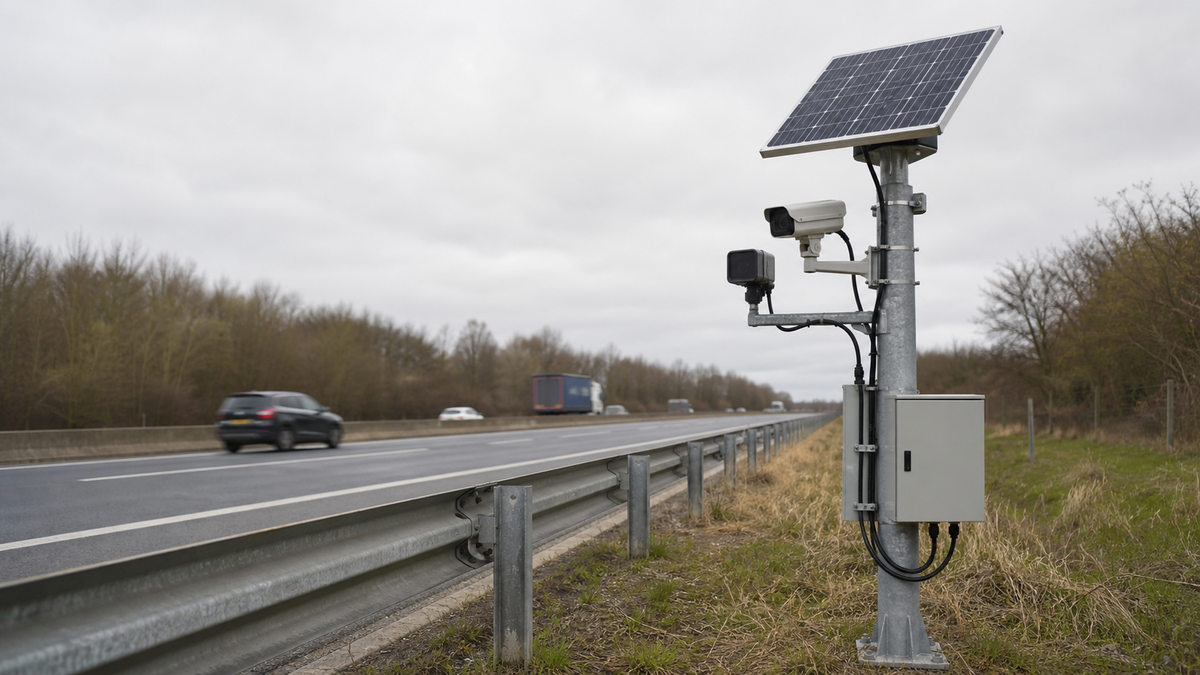
Teams, die Verkehrszähler, Klassifikatoren, ANPR-Kameras, Sensoren zur Erfassung von Fahrzeiten und Kommunikationsausrüstung für Verkehrskorridore einsetzen.
Behörden fügen permanente Überwachungspunkte, Straßenwetterstationen und Systeme für Arbeitsbereiche hinzu, wenn ein neuer Netzanschluss die Bereitstellung verzögern würde.
Auftragnehmer, die für ein Projekt eine mobile Stromversorgung zur Überwachung benötigen und anschließend planen, dieselbe Ausrüstung an einen anderen Standort zu verlegen.
Betreiber in einer ähnlich anspruchsvollen Vibrationsumgebung, mit strengeren Anforderungen an Sicherheit und Verfügbarkeit, bei denen die Überwachungsfunktion sicherheitsrelevant ist.
Mechanische Zuverlässigkeit
Winterkorrosion
Genehmigungen und Umfang
Felddesign
Referenzarchitektur
Überprüfen Sie die Solarstromplattform für abgelegene Gebiete
| Laden | Muster zeichnen | Größenhinweis |
|---|---|---|
| Induktionsschleifen- oder Radarzähler | ||
| ANPR- oder Klassifizierungskamera | ||
| Edge-Verarbeitungseinheit | ||
| Mobilfunk-Uplink | ||
| Wechselverkehrszeichen | ||
| Straßenwettersensoren |
| Blockieren | Typische Planungsspezifikation | Zweck speziell für den Straßenrand |
|---|---|---|
| Solarmodul | ||
| Batterie | ||
| Laderegler | ||
| Einhausung | ||
| Geschützte Ausgaben | ||
| Befestigungsmaterial |
Typische Konfigurationen als Planungsreferenz; die endgültige Dimensionierung hängt von den Standort- und Lastdaten ab.
| Szenario | Referenzlösung | Panel und Konstruktion | Erwartetes Ergebnis |
|---|---|---|---|
| Energiearmer Verkehrszähler oder Sensorknoten | Häufig ausgelegt für ein 60–100-W-Panel mit einer moderaten LiFePO4-Reserve, MPPT-Ladung, geschütztem Gleichstromausgang und einer vibrationsbeständigen 5–50-W-Panelhalterung – jedoch nur, wenn das ausgewählte Panel und die Lasten am Standort innerhalb seines Nennbereichs bleiben. | Eine Planungsreferenz für moderate, vorhersehbare Lasten. Die endgültige Dimensionierung richtet sich weiterhin nach der Sonneneinstrahlung im sonnenärmsten Monat, dem Telemetrieverhalten, der Wintertemperatur, der Verschattung, der Autonomie und der örtlichen baurechtlichen Genehmigung. | |
| ANPR- oder Klassifizierungskamera mit Mobilfunk-Uplink | Üblicherweise in einem Array-Bereich von 200–600 W mit einer deutlich größeren LiFePO4-Batteriebank, MPPT-Laderegler, IP65-Stromgehäuse, separat abgesicherten Stromschienen, Überspannungsschutz und projektspezifischer Mast-Hardware bewertet. | Verhindert, dass IR- oder Verarbeitungsspitzen die Kommunikationsschiene zurücksetzen, und hält die Winterreserve als explizites Auslegungsziel sichtbar, statt sie als unspezifizierten Sicherheitsfaktor zu behandeln. | |
| Verlegbare Plattform zur Überwachung von Arbeitsbereichen | Wählen Sie die Größe innerhalb des Anwendungsbereichs von 60–600 W entsprechend der tatsächlichen Last und ergänzen Sie unverlierbare Befestigungselemente, robuste Steckverbinder, manipulationssichere Verschlüsse, kompatible Kabel sowie ein Gehäuse, das für wiederholte Handhabung und Transporte ausgelegt ist. | Eine wiederverwendbare Energieplattform, deren mechanische Auslegung von Anfang an auf eine Verlagerung ausgelegt ist. Für jeden neuen Standort sind weiterhin Prüfungen zu Solarenergie, Wind, Platzierung und behördlichen Anforderungen erforderlich. |
Melden Sie sich für exklusive Updates an,
neue Ankünfte & Rabatte nur für Insider


