
Monitoring role
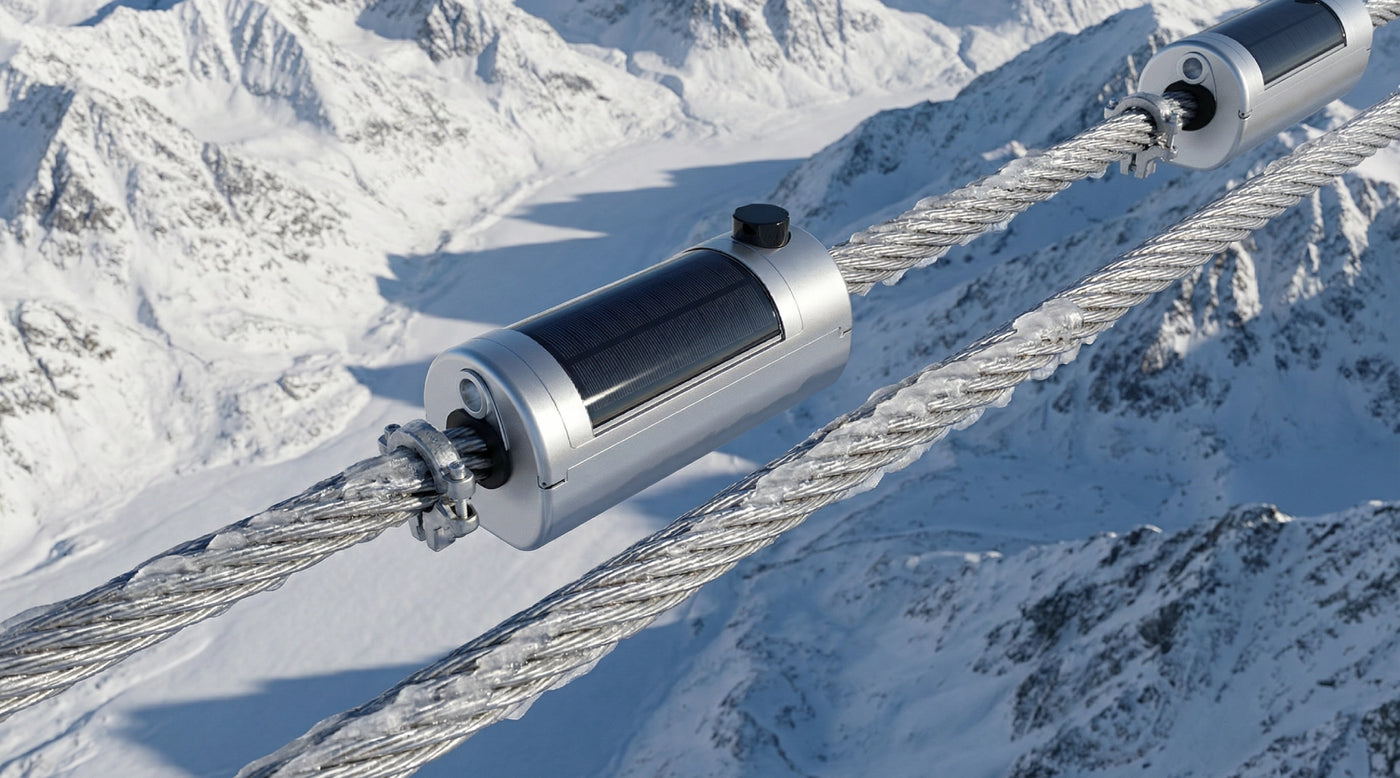
Operators that need remote visual evidence and condition trends before deciding whether to patrol, dispatch, reroute, or escalate an icing event.
Engineers responsible for identifying high-risk spans, reviewing icing progression, and defining monitoring and mitigation criteria.
Integrators designing cameras, sensing interfaces, 4G or other backhaul, storage, platform fields, alarms, history, and cybersecurity.
Programs comparing a known icing corridor with a normal span before standardizing hardware, image cadence, and alarm rules.
Monitoring role
Energy continuity
Best-fit scenarios
Integration and governance
Representative topology
| Item | Reference value |
|---|---|
| Model | |
| Application | |
| Power method | |
| Battery | |
| Communications | |
| Core functions | |
| Local storage | |
| Ingress and temperature |
| Decision | What to define |
|---|---|
| Pilot sites | |
| Visual evidence | |
| Alarm policy | |
| Energy and communications | |
| Platform integration |
| Panel | Output / connection | IP rating (as listed) | Link |
|---|---|---|---|
| 6 W mini, alligator clips | |||
| 6 W mini, DC5521 | |||
| 8 W mini, multi-voltage | |||
| 10 W 12 V panel | |||
| 12 W mini, multi-voltage | |||
| 25 W mini, built-in MPPT | |||
| 5 W 5 V camera panels | |||
| Custom panel |
| Covers | Guide |
|---|---|
| Technology review (2026) | |
| ROI calculation | |
| Vendor selection | |
| Cold-climate batteries | |
| Equipment pricing | |
| Beginner introduction | |
| Best power supply | |
| Sizing remote monitors | |
| Hybrid power towers | |
| Battery sizing | |
| Icing monitoring | |
| Solar vs CT power | |
| Panel sizing | |
| Deployment | |
| Corridor surveillance | |
| Vegetation management | |
| Fault location | |
| Galloping monitoring | |
| Ice monitoring systems | |
| Lightning detection | |
| MPPT controllers | |
| Manufacturer landscape | |
| Small utilities | |
| vs traditional inspection | |
| Predictive maintenance | |
| Real-time benefits | |
| SCADA integration | |
| Battery autonomy | |
| Installation on towers | |
| Power budget template | |
| Extreme weather |
Typical configurations for planning reference; final sizing depends on site and load data.
| Scenario | Reference solution | Panel and construction | Expected outcome |
|---|---|---|---|
| Known high-risk icing corridor pilot | Confirm line-current profile, winter solar input, camera view, cold-weather accessories, conductor and mounting interface, 4G coverage, local storage, installation method, and maintenance access. | A corridor-specific evidence baseline and validated power, communications, and alarm workflow; not a guaranteed icing threshold for other spans. | |
| Representative comparison span | Keep camera settings, reporting cadence, timestamps, platform fields, and alarm evaluation consistent enough for a useful comparison. | A comparison dataset for tuning evidence requirements and identifying which differences are caused by the corridor rather than the monitoring chain. | |
| Standardized rollout after winter validation | Plan device inventory, data costs, storage, spares, battery and optical maintenance, cleaning, inspection, commissioning records, and support ownership. | A repeatable deployment class with documented acceptance and evidence policies; each span still requires installation and communications review. |


