Custom solar solutions that power your projects forward.

Custom & OEM solar panels for IoT sensors, security cameras and weather stations.

From prototype to production — one supplier, one contact.

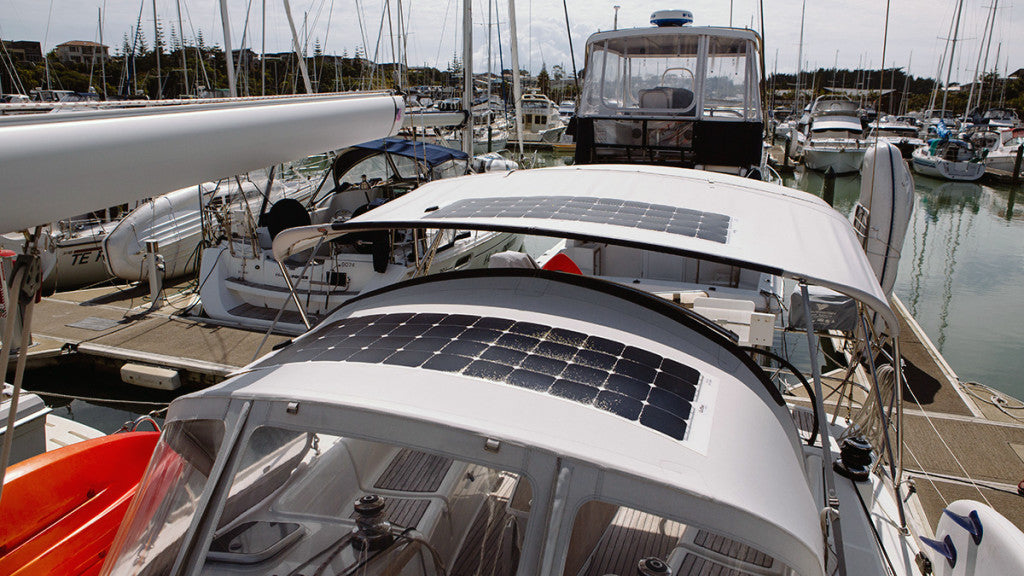
Two flexible solar panels mounted on the white canvas cover (bimini/dodger) of a sailboat in a busy marina.

Marine Solar Panels Built for Salt-Fog & Vibration

Engineered for the harshest marine environments, LinkSolar delivers reliable, silent, and independent solar power solutions for leisure, commercial, and offshore applications.

Cast Off From the Grid, Not From Reliability

For any mariner, reliable power at sea is non-negotiable. It’s the lifeblood of navigation, communication, safety, and comfort. Yet, traditional power sources are a constant compromise. Diesel generators are noisy, require costly fuel, demand frequent maintenance, and produce fumes. Relying solely on your engine to charge batteries means wasted fuel and unnecessary engine hours.

LinkSolar provides the definitive solution. Our marine solar panel systems are designed to conquer these challenges, harnessing the sun's limitless energy to deliver a steady, silent, and resilient power supply. It’s time to upgrade your vessel with a power source that gives you true freedom and peace of mind on the water.

Built for Life Offshore: Durability Meets Performance

  • rigid solar panel mounted on adjustable pole bracket for sailboat marine charging

    Saltwater & Corrosion Resistance

    Our panels feature anodized aluminum frames, marine-grade sealants, and fully waterproof, IP67/IP68 rated junction boxes. This multi-layered defense ensures relentless performance against constant salt spray and humidity.

  • solar panel array installed on yacht roof at mountain lake

    Rugged, High-Impact Construction

    From the high-transmission tempered glass on our rigid panels to the advanced, durable ETFE top sheets on our flexible models, our products are built to withstand wave impacts, accidental knocks, and the daily rigors of life on board.

  • A close-up, top-down view of a monocrystalline solar panel, showing the detailed grid of dark, textured cells and white connectors.

    Maximum Power Density

    We utilize premium monocrystalline solar cells that deliver the highest possible efficiency. This means more power generation from a smaller footprint—a critical advantage on vessels where space is a premium.

  • flexible solar panels with backsheet and MC4 cables arranged on production table

    Advanced Low-Light & Shadow Performance

    Integrated bypass diodes and superior cell technology ensure our panels continue to produce power even in overcast conditions or when partially shaded by sails, masts, or equipment, maximizing your energy harvest throughout the day.

Flexible solar panels suit boats when the space is curved or too light to carry a frame. Fit starts from a measured outline, because panel sizes follow the cell grid and rarely fill a deck or bimini exactly.

LinkSolar is a China-based B2B supplier of custom & OEM solar panels, solar cells and mounting hardware.

How do you fit solar panels to a boat?

Start with the space and the battery, not with a wattage. Measure the deck, hardtop or bimini, and mark hatches, cleats, antennas and anything that shades the area. Cells come in fixed sizes, so the usable size moves in steps. A space wider than the largest panel allows may need two panels, and each panel needs its own junction box.

Wire by battery voltage. Panels in series or parallel should match what the charge controller accepts for your bank.

ETFE or PET on the water

ETFE is the usual top sheet for salt water and long service. PET costs less and suits shorter or lighter use. See the flexible panels, including ETFE models, on the flexible solar panel page.

Fixing the panel and routing the cable

Panels with a back sheet are usually bonded with solar-panel adhesive or double-sided foam tape, and sealing the edges helps stop them lifting. On fabric, use a mounting method made for the canvas; attaching flexible panels to a bimini covers the options.

Decide the junction box early. A rear box is better protected and hides the cable, but needs a cut-out or hole in the surface under it. A front box is easier to install, leaves the cable visible and uses part of the panel length. Never drill through the cell area, because that destroys the panel.

What to send for a boat panel

  1. Measured outline with keep-out areas, or a dimensioned drawing.
  2. Where the panel goes: deck, hardtop, bimini or cabin top, and whether it is curved.
  3. Battery voltage and charge controller.
  4. Junction box position and cable exit.
  5. Top sheet and how you plan to fix it.

Custom sizes are quoted on your drawing; see custom flexible solar panels.

Typical devices & scenarios

Kit IDSolar PanelBattery (Ah / Wh)ControllerEst. Harvest (Wh/day @ 4h)Mounting

LS-MRN-10E-12

10W / 12V rigid epoxy

7Ah / 84Wh

PWM IP67 10A

≈ 35–45

Rail | Flat | VHB

LS-MRN-20E-12

20W / 12V rigid epoxy

12Ah / 144Wh

PWM IP67 10A

≈ 70–90

Rail | Flat

LS-MRN-20F-12

Flexible 20W / 12V

15Ah / 180Wh

PWM IP67 10A

≈ 70–90

Curved adhesive + screws

* Est. Daily Harvest is estimated based on approximately 4 hours of effective sunlight, which may vary with season and location.
For precise selection, please provide device power consumption and operating hours, and we will provide configuration recommendations within 24 hours.

Powering Every Vessel, Every Mission

LinkSolar provides proven solar solutions across the full spectrum of marine applications.

solar panel system installed on boat roof at lakeside pier

Leisure & Recreational Marine

Sailboats & Catamarans: Power autopilots, navigation suites, refrigerators, and cabin lights. Extend your cruising range and enjoy silent, anchor-out time without running the engine. Our flexible panels are ideal for biminis and curved deck surfaces.

Yachts & Powerboats: Maintain battery banks, run air conditioning, power entertainment systems, and reduce generator dependency. Ensure your batteries are always topped off and ready for your next adventure.

Trawlers & Liveaboards: Achieve true energy independence. Generate enough power for all onboard appliances, creating a sustainable and comfortable full-time home on the water.

flexible marine solar panels installed on boat canopy for off grid charging

Commercial & Industrial Marine

Fishing Vessels: Reliably power fishfinders, GPS, communication radios, and deck lighting for safer and more productive operations, day and night.

Workboats & Crew Transport: Ensure critical systems are always online. Power tools, charging stations, and onboard electronics without relying solely on the main engine alternator.

Aquaculture & Mariculture: Power automated feeding systems, water quality sensors, and monitoring equipment on remote barges and platforms, improving efficiency and reducing operational costs.

flexible solar panels installed on yacht roof for marine power generation

Offshore & Unmanned Systems

Navigational Aids & Buoys: Provide year-round, autonomous power for lanterns, AIS transmitters, and meteorological sensors on critical navigation buoys.

Scientific Research Platforms: Power remote data collection equipment, telemetry systems, and oceanographic sensors for long-term, unmanned deployments.

Offshore Monitoring: Secure, reliable power for security cameras, environmental sensors, and communications relays on offshore platforms and structures.

Buyer questions

Are self-adhesive flexible solar panels reliable for marine use and easy to install?

The flexible marine configurations on this page pair adhesive with fasteners: the flexible 20 W kit mounts with curved adhesive + screws, so the bond is not the only thing holding the panel, and the rigid 10 W kit can mount with VHB very-high-bond tape; for other rigid kits, ask us which mounting method fits. Reliability offshore comes from the build: ETFE top sheets on flexible models, IP67/IP68-rated junction boxes, anodized aluminum frames and marine-grade sealants against constant salt spray, and bypass diodes that keep output up when a mast or sail shades part of the array. Flexible panels are the usual choice for biminis and curved deck surfaces; for panels built to your deck or canopy shape, see custom flexible solar panels.

What should I consider when choosing a solar-powered bilge pump for my boat?

Work from the pump's draw and duty cycle: watts × hours run per day = daily watt-hours. Then match a configuration whose daily harvest covers it — the kits on this page are estimated at about 4 hours of effective sunlight, so a 20 W kit returns roughly 70–90 Wh a day (with a 12 Ah battery and a PWM IP67 10 A controller) and a 10 W kit roughly 35–45 Wh. Because a bilge pump cycles on a float switch rather than running continuously, the battery in these kits buffers the starts and the controller keeps charging safe. Send us the pump's power draw and expected run hours and we will size the configuration for your boat.

Chat on WhatsApp