

2W 5V Solar Panel with DC5521 Socket and 1m Cable - 5-Pack
$4285 USDUnit price
10W 12V Solar Panel with 3m DC5521 Cable and Mounting Clips
$3600 USDUnit price
8W Mini Solar Panel with 5V/6V/9V/12V DC Output
$5240 USDUnit price-
12W Mini Solar Panel with Multi-Voltage DC Output
$6250 USDUnit price -
4W Mini Solar Panel with 5V/6V/9V/12V DC Output
$4290 USDUnit price


How to choose a DC plug solar panel
- Voltage first. Match the panel's working voltage to the input on your device or controller: 5V and 6V boards suit small electronics and cameras; 12V and 18V panels have higher working voltages. A 12V rating alone does not mean a panel can charge a 12V battery, so read what each product page says it is for. Three mini panels (4W, 8W and 12W) have a selectable 5V, 6V, 9V or 12V DC output.
- Plug or socket. Some listings end in a DC5521 male plug; others have a female DC5521 socket or lead. One 3W 6V panel uses a generic DC barrel lead. Check the gender and size on the product page against your cable.
- Lead length. Listings give the cable length, for example 1 m, 1.5 m or 3 m. A longer lead lets the panel sit in the sun while the device stays in shade.
- Other outputs. A few panels offer DC5521 as one option next to USB-C or Micro-USB, and one portable charger has USB-C, USB-A and DC outputs together.
- Frame and surface. Choose framed glass, PET or ETFE boards according to where the panel will be mounted; each listing names its surface.
DC plug solar panel questions
What does DC5521 mean?
It is a barrel connector with a 5.5 mm outer diameter and a 2.1 mm centre pin. It is one of the most common DC power plugs on small electronics, routers and camera power inputs. If your device uses a different barrel size, look for an adapter or a panel with another connector.
Can I charge a 12V battery straight from the plug?
Put a charge controller between the panel and the battery. One 18V listing here is sold as a flexible panel kit for 12V battery projects; read the product page for what is in the box. The solar battery chargers page groups the kits made for this job.
How do I check the polarity?
Most DC5521 leads are centre-positive, but confirm it on the product page and with a meter before connecting a device. Our guide to mini solar panels with connectors covers plug types and wiring checks.
Can I connect two panels together?
Yes, with the right cable and only when the voltages match the receiving equipment. See solar panel parallel connectors before you join leads.
I need a different plug or lead length.
Custom leads, plugs and panel sizes are quoted on request. Use the Quote Now button with your device input and quantity, or read about replacement mini solar panel compatibility first. All small panels are on the mini solar panels page.
Solar Products for Reliable Off-Grid and Embedded Power
At LinkSolar, we provide a wide range of solar energy products designed for small systems, embedded devices, and off-grid applications. From compact mini solar panels and high-efficiency solar cells to mounting hardware and portable solar chargers, our collection helps engineers, integrators, and DIY builders power devices anywhere sunlight is available.
Our products are used in applications such as IoT sensors, remote monitoring systems, RV installations, off-grid cabins, outdoor electronics, and portable power systems. Whether you are prototyping a new solar-powered device or building a reliable outdoor power solution, our solar components offer the flexibility and performance required for modern solar projects.
Explore Our Solar Product Categories
Mini Solar Panels for Compact Devices
Mini solar panels are ideal for low-power electronics and embedded systems. These panels are commonly used in IoT nodes, smart sensors, environmental monitoring devices, and other electronics that require reliable energy harvesting in a compact footprint. Their small size and efficient output make them suitable for devices where space is limited but consistent power is needed.
Flexible and Portable Solar Panels
Flexible and portable solar panels are designed for mobility and easy installation. These panels are often used in outdoor activities, RV systems, marine environments, and portable charging setups. Lightweight construction and high-efficiency solar cells allow users to generate power wherever sunlight is available.
Solar Cells for Custom Panels
Solar cells are the foundation of every solar module. For custom solar projects or specialized equipment, using individual solar cells allows engineers to design panels with specific voltage, shape, and power requirements. This flexibility is especially useful for embedded devices and custom product development.
Solar Mounting Hardware and Accessories
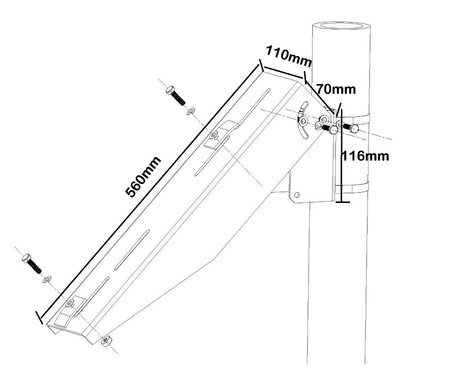
Proper mounting is essential for maximizing solar performance. Our solar mounting brackets, pole mounts, and installation accessories help secure panels safely on roofs, walls, poles, or ground systems. Adjustable mounting solutions also allow panels to be angled for optimal sunlight exposure and improved energy generation.
Built for Outdoor Reliability
Solar systems often operate in challenging environments, so durability is critical. Many of our solar products are designed with weather-resistant materials, UV-resistant surfaces, and waterproof construction to ensure long-term outdoor performance. These features make them suitable for applications such as remote monitoring stations, outdoor sensors, smart infrastructure, and off-grid energy systems.
Ideal for DIY Projects and Professional Integrations
Our solar products serve both individual makers and professional system integrators. Whether you are building a small DIY solar project or designing solar power for commercial equipment, our product range provides scalable solutions—from individual solar cells to ready-to-install modules and mounting hardware.
Featured Collection
View all-
-
11W Portable Foldable Solar Charger for Phones & Power Banks
$5730 USDUnit price -

-
1.3W 6V Mini Solar Panel with SunPower IBC Cells, Matte PET, 85x85mm
From $1290 USDUnit price -
Up to $15.50 off
6.6W Back-Contact IBC Mono Solar Cell, 166mm, Full / Cut Options
From $1280 USDUnit price -


Solar Panel Clamp Kit for 1-5/8 in. Strut Channel, 10-Piece
$2739 USDUnit price -


Solar Panel End Clamps for Unistrut, 30/35mm, 10-Pack
$2739 USDUnit price -


Solar Panel Mid Clamps for Unistrut, 30/35mm, 10-Pack
$2739 USDUnit price -
SUS304 Solar Hanger Bolts, 200mm, M10 Nuts & EPDM Seal - 6/10 Pack
From $2850 USDUnit price -
12W Mini Solar Panel with Multi-Voltage DC Output
$6250 USDUnit price




FAQs
Solar Products
What types of solar products does LinkSolar offer?
What types of solar products does LinkSolar offer?
LinkSolar provides a wide range of solar energy components, including mini solar panels, solar cells, flexible solar panels, portable solar chargers, and solar mounting hardware. These products are designed for applications such as IoT devices, outdoor electronics, off-grid systems, RV installations, and DIY solar projects.
What are mini solar panels typically used for?
What are mini solar panels typically used for?
Mini solar panels are commonly used to power small electronic devices that require low to moderate energy. Typical applications include IoT sensors, GPS trackers, remote monitoring systems, LED lighting, and educational solar projects.
Can I use solar panels for off-grid power systems?
Can I use solar panels for off-grid power systems?
Yes. Solar panels are widely used in off-grid systems where access to traditional electricity is limited. Depending on the system design, solar panels can charge batteries that power devices such as outdoor cameras, environmental sensors, lighting systems, and portable electronics.
What is the difference between solar panels and solar cells?
What is the difference between solar panels and solar cells?
Solar cells are the individual photovoltaic units that convert sunlight into electricity. Multiple solar cells are connected together to form a solar panel. For custom solar projects, some users prefer purchasing solar cells separately to build panels with specific voltage or size requirements.
How do I choose the right solar panel for my project?
How do I choose the right solar panel for my project?
Choosing the right solar panel depends on several factors, including power requirements, available installation space, sunlight conditions, and whether the system will use battery storage. Small electronics typically require compact panels, while larger systems may need higher-power modules.
Are your solar panels suitable for outdoor use?
Are your solar panels suitable for outdoor use?
Most solar panels are designed for outdoor environments and use durable materials that can withstand sunlight, moisture, and temperature changes. Weather-resistant construction helps ensure reliable performance in long-term outdoor applications.
Do I need a solar charge controller?
Do I need a solar charge controller?
If your solar panel is used to charge a battery, a solar charge controller is usually recommended. The controller regulates voltage and current to protect the battery from overcharging and improves the overall efficiency and lifespan of the system.
What mounting options are available for solar panels?
What mounting options are available for solar panels?
Solar panels can be mounted using various solutions such as pole mounts, wall brackets, roof mounts, or adjustable angle brackets. Proper mounting helps optimize the panel's angle toward sunlight, improving energy generation and system efficiency.
Can solar panels work on cloudy days?
Can solar panels work on cloudy days?
Solar panels can still generate electricity on cloudy days, although the output will be lower than in direct sunlight. High-efficiency solar cells can still capture diffused sunlight, allowing systems to continue producing some power even in less ideal conditions.
Do you support custom solar panel solutions?
Do you support custom solar panel solutions?
Yes. Many projects require specific panel sizes, voltages, or power outputs. LinkSolar can support custom solar panel development for research projects, and specialized equipment applications.