Solar Panel Pole Mounts for Remote Cameras, Sensors and Small Off-Grid Systems
Solar panel pole mounts are used when a panel needs better sun exposure, more secure placement, or easier alignment than a wall or flat surface can provide. For remote cameras, telemetry devices, environmental sensors, gate systems and other small off-grid equipment, mounting the panel on a pole often solves several problems at once: it lifts the module above grass and fences, improves orientation, reduces shading, and makes tampering harder.
This collection focuses on pole mounting hardware for small and mid-size solar panels commonly used in IoT, monitoring, communications and remote security projects. If your application is specifically related to cameras or access control, you can also explore our solar solutions for security cameras and gate systems. For lower-power telemetry and monitoring projects, see our solar solutions for IoT sensors and smart devices.
How to Choose the Right Solar Panel Pole Mount
1. Start with panel size and weight
The first question is not just wattage, but physical size. Two panels with similar wattage can have different dimensions and wind loading. Always match the mount to the actual module size, frame style and expected outdoor conditions. If you are still choosing the panel itself, browse our mini solar panels collection for compact low-power applications.
2. Check the pole type and diameter
Some projects use round steel poles, others use square posts or site-specific structures. Before buying, confirm the pole diameter, mounting surface and available installation height. The wrong clamp style creates rotation, poor alignment and long-term loosening in the field.
3. Consider wind and exposure
A mount that works fine in a sheltered backyard may fail on an exposed roadside, farm entrance or hilltop monitoring site. Wind load matters more as panel size increases. For remote installations, a more rigid mounting structure is usually worth it. If your project needs a full power package rather than mounting alone, see our remote solar power system solutions.
4. Make tilt adjustment part of the design
Pole mounts are often chosen because the pole itself cannot face the ideal solar direction. Adjustable tilt helps recover energy yield when the structure orientation is fixed. This is especially important for winter-biased systems and locations with weak sunlight during part of the year.
5. Think about maintenance access
Mount the panel high enough to reduce shading and tampering, but not so high that cleaning, inspection or wiring service becomes a headache. A good design balances security, performance and field service practicality.
Which Product Fits Which Project?
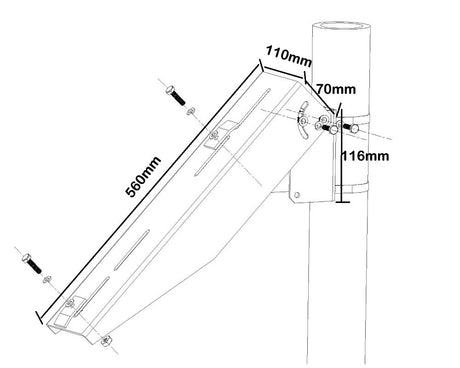
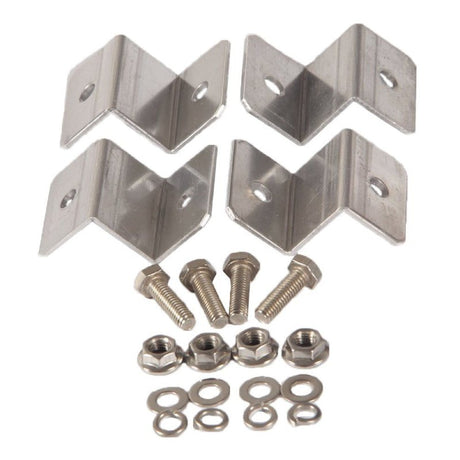
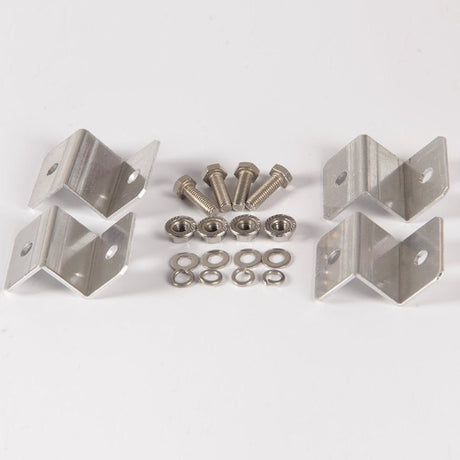
Universal Solar Panel Pole Mount Kit | Adjustable Brackets for 5W–50W Panels
Best for: remote sensors, monitoring devices, small solar camera systems, telemetry poles and general off-grid field equipment.
This is the most versatile option in the collection for small to mid-size panels. It suits projects that need adjustability and a practical mounting range across different panel sizes.
Universal Mount Bracket for 5W Solar Panel Wall/Pole Mount
Best for: very small solar panels, compact sensor nodes, low-power equipment and projects where bracket footprint matters.
This option is ideal when the powered device has a small daily energy budget and you want a simple, compact mounting solution for a lightweight panel.
Solar Panel Pole Mount Bracket - Adjustable Mounting System for 30–60W Panels
Best for: larger remote cameras, communications equipment, higher-consumption devices and more exposed outdoor installations.
This is the better choice when panel size, wind exposure or site conditions call for a stronger support structure than a light-duty bracket can provide.
Why Pole Mounts Are Common in Remote Solar Projects
- Better sun access: raises panels above grass, shrubs, fences and uneven ground.
- Cleaner cable routing: easier to route wiring along or inside the pole structure.
- Improved security: keeps the panel away from casual contact and accidental damage.
- Flexible orientation: easier to set panel angle when buildings are not available.
- Standardized deployment: useful for fleets of similar field sites such as gateways, sensor poles and monitoring stations.
Installation Notes for Better Reliability
- Confirm pole strength, wall thickness and foundation stability before installation.
- Use UV-resistant cable management and avoid sharp bending near the panel frame.
- Check clamp tightness after installation and again after the first period of wind exposure.
- For exposed sites, review grounding, surge protection and local lightning practices.
- When possible, standardize one bracket and wiring method across multiple sites to simplify maintenance.
Related Mounting and Power Resources
If you need more than a single bracket, you may also want to browse our broader solar panel brackets and mounts collection. For camera-specific power planning, visit our security camera solar solutions page. For sensor and telemetry deployments, our IoT solar page and remote solar power system page are better next steps.